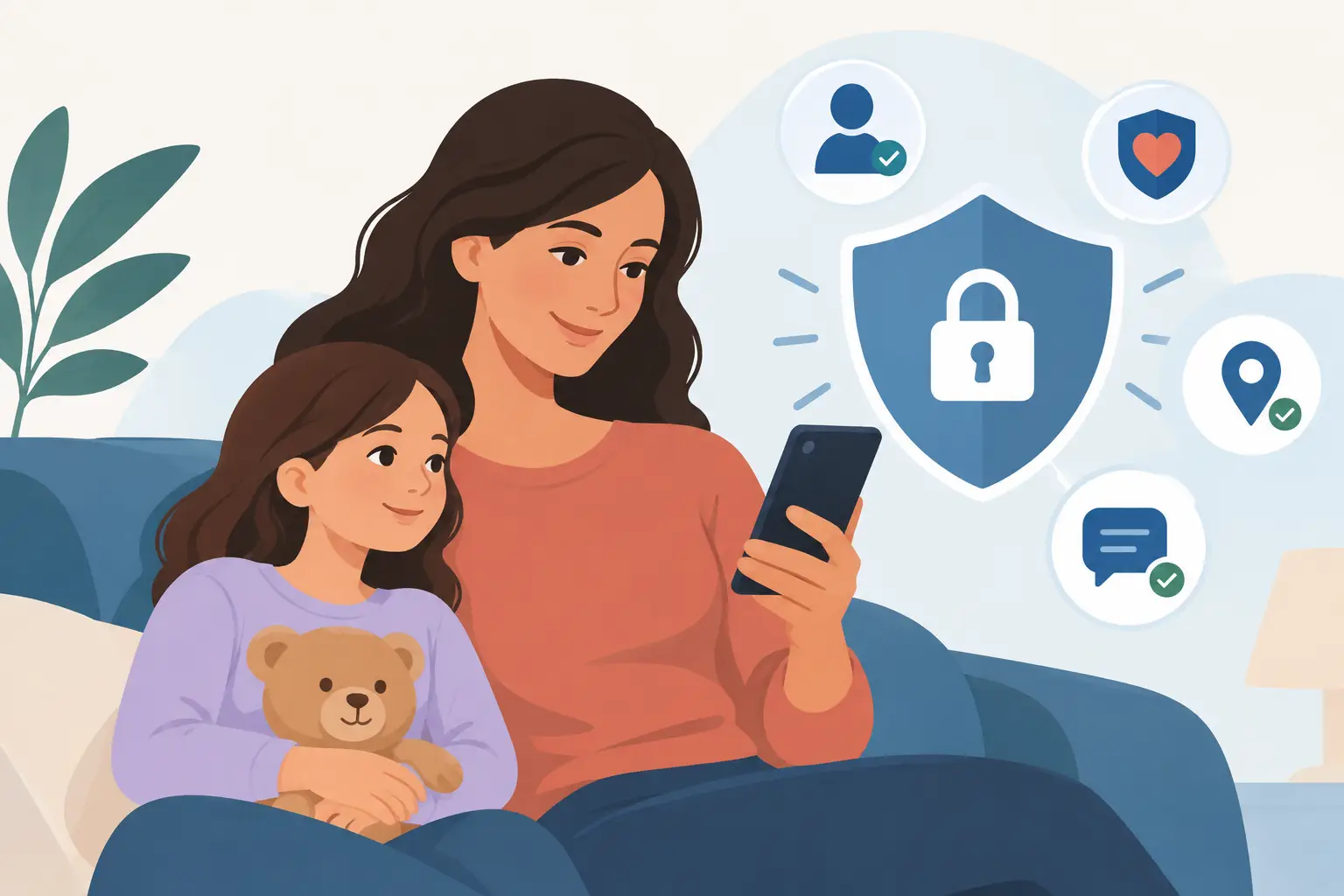
Dating as a parent asks more of your time, energy, and trust. That is why the top dating safety features are not just nice extras. They help you decide who gets access to your attention, your personal information, and eventually your real life. The right dating space should make it easier to connect with people who respect your role as a parent while giving you practical ways to move at a pace that feels right.
Safety does not mean assuming every new match has bad intentions. It means creating healthy boundaries early, using the tools available to you, and remembering that a good connection will never punish you for being careful. For single parents, that confidence matters even more.
Top Dating Safety Features That Support Better Matches
A strong dating experience begins before the first message. The best safety features help create a more accountable community, but they should also give you control over how and when you share.
Profile privacy and personal-information control
Your dating profile should introduce your personality, interests, and relationship goals without revealing details that make your daily routine easy to track. A first name, a favorite weekend activity, and an honest note about being a parent are enough to start a conversation. Your child’s full name, school, team schedule, neighborhood landmarks, workplace address, and custody routine are not.
Look for settings that let you control what appears on your profile and who can contact you. Privacy is especially useful when you are newly dating after a divorce or simply want to keep your dating life separate from other parts of your world until you feel comfortable.
Photos deserve the same care. Choose images that feel like you, but avoid pictures that show house numbers, school logos, license plates, or other identifying details in the background. Many parents also prefer not to include their children in dating photos. That choice protects their privacy and keeps the focus where it belongs: on getting to know you.
Blocking and reporting tools
A respectful match understands a boundary the first time. If someone becomes aggressive, sends unwanted sexual messages, asks for money, pressures you to move off the platform immediately, or will not accept a no, you should be able to block and report them without a complicated process.
Blocking ends contact. Reporting gives the platform an opportunity to review behavior that may affect other members, too. These tools work best when people use them. You do not need to build a case, debate someone’s intentions, or worry that you are being rude. If a conversation makes you uneasy, that is enough reason to step away.
Watch for patterns rather than trying to explain away one uncomfortable moment. Someone who ignores a simple request, repeatedly changes their story, or makes you feel guilty for having boundaries is showing you something useful early.
Video chat before meeting in person
Video chat is one of the most practical safety and compatibility tools available to busy parents. A brief call can help confirm that the person matches their profile, that the conversation flows naturally, and that you both want the same kind of connection. It can also save you from arranging childcare for a date that clearly is not a fit.
You do not need to treat a video call like an interview. Keep it simple: schedule 15 or 20 minutes after the kids are settled, talk about what you each enjoy, and notice whether the interaction feels respectful and easy. If a person refuses every reasonable option to verify who they are, consider that a sign to slow down.
For many single parents, a video call is also a useful middle step between messaging and meeting. It protects your limited free time while allowing trust to develop naturally.
Location awareness without oversharing
Nearby search can make dating feel more realistic. Meeting someone within a manageable distance may matter when you are coordinating school pickup, work, and co-parenting schedules. Still, convenience should not require sharing your precise location.
Keep early conversations general about where you live. It is fine to say you are on the north side of town or within a certain metro area. Save your address, regular coffee shop, child’s activities, and other routines for much later, if you choose to share them at all.
When you plan a first date, choose a public place you can reach on your own. A coffee shop, casual restaurant, bookstore, or daytime community event can work well. Drive yourself or use your own transportation, tell a trusted friend where you will be, and arrange a check-in time. These are not dramatic precautions. They are small choices that let you stay in control.
Safety Features Work Best With Clear Boundaries
Technology can support safer dating, but it cannot replace your instincts. A verified-looking profile, a friendly message, or shared parenting experience does not mean you need to rush. Trust grows through consistency: someone follows through, respects your schedule, accepts that your children come first, and does not make you feel like you have to earn basic kindness.
Be especially cautious with requests that create urgency. A new match who declares intense feelings immediately, asks you to keep the relationship secret, wants financial help, or insists on meeting your children quickly is asking for more access than they have earned. A healthy potential partner will understand why parents move thoughtfully.
It is also okay to keep early details light. You can discuss the realities of parenting without sharing your children’s names, ages, schools, or custody arrangements. Try language such as, “My schedule depends on parenting time, but I can usually plan ahead,” or “I keep my kids’ details private until I know someone well.” The right person will respect that answer without pushing.
What a Safer Dating Community Feels Like
The safest dating environment is not one that promises perfection. No platform can fully know a person’s intentions, and no feature removes the need for good judgment. Instead, look for a community that gives you meaningful choices: tools for messaging and video chat, clear ways to control contact, and a dating pool where your life as a parent is understood from the start.
That shared understanding can reduce one of the biggest frustrations of mainstream dating. You do not have to explain why a last-minute plan may not work, why your evenings are limited, or why introducing children is a serious milestone. On Single and Parent, the people you meet are more likely to recognize that parenting responsibilities are part of the picture, not an inconvenience to work around.
A focused community can make conversations more relevant, but compatibility still takes time. Pay attention to whether a match is curious about your values, patient with your availability, and willing to build a connection at a steady pace. Chemistry matters, but reliability matters, too.
A Simple First-Date Safety Routine
Once you decide to meet, keep the plan easy to manage. Confirm the date through the app or message thread, meet in a public place, and let someone you trust know the location, name, and expected end time. Set your own transportation plan so you can leave whenever you want.
Avoid bringing a date into your home early or introducing them to your children before the relationship has had time to establish trust. There is no universal timeline for that step. It depends on your family, your child’s needs, and the consistency you have seen over time. Anyone worth dating will understand that a parent’s caution is an act of care, not a rejection.
If the date feels good, you can look forward to the next conversation. If it does not, you can leave politely and without apology. You are not looking for someone who simply fits into an open spot on your calendar. You are making room for a connection that respects the life you have built and the family you are protecting.