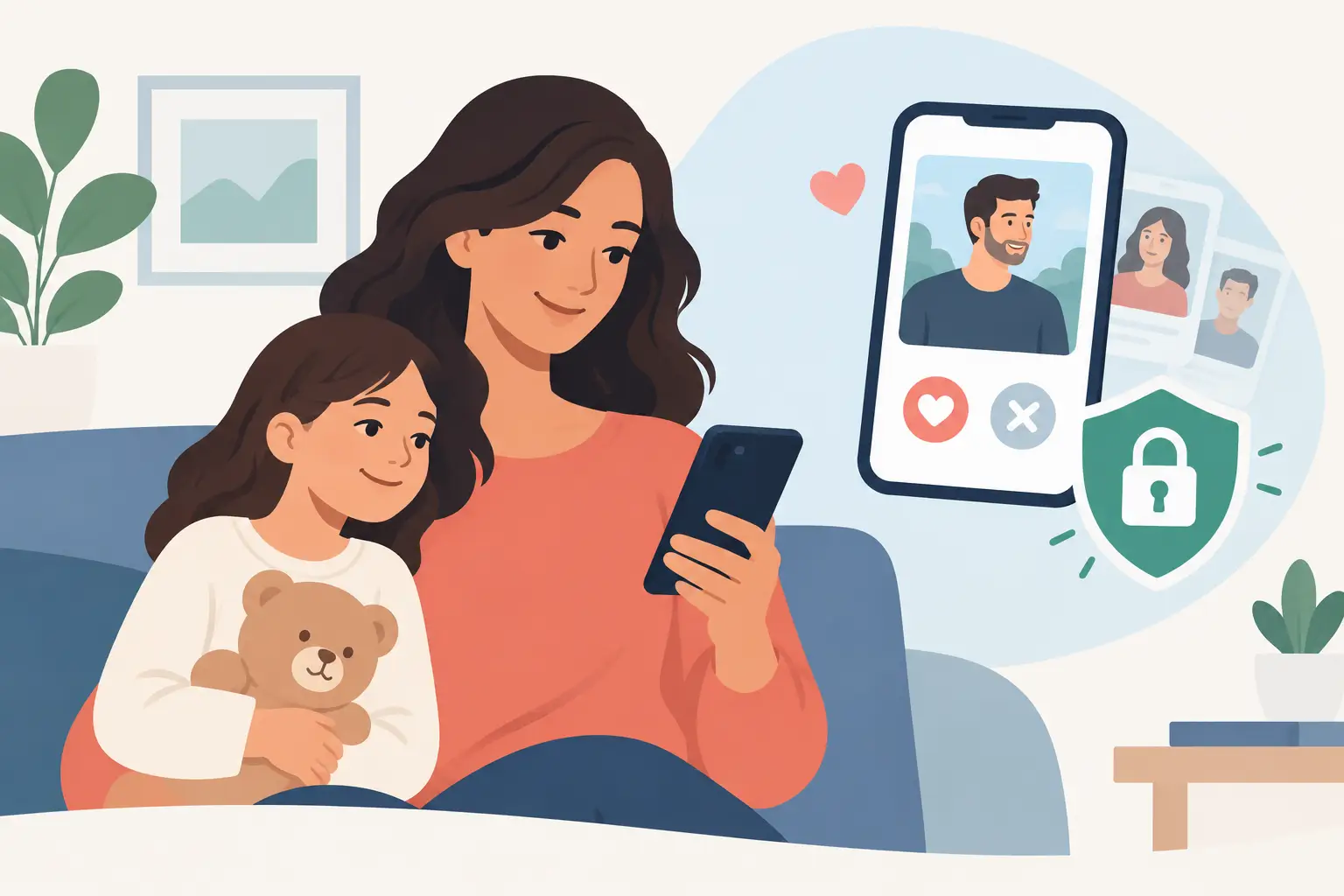
A great conversation can make dating feel possible again. Then a profile asks for your phone number right away, wants to meet tonight, or shares a story that does not quite add up. Are dating apps safe? They can be, but safety comes from choosing your boundaries, paying attention to behavior, and using the tools available to you before trust is earned.
For single parents, that question carries extra weight. You are not only protecting your own time, privacy, and emotions. You are also protecting your family routine and the people who depend on you. The goal is not to approach every new match with fear. It is to date with enough care that you can stay open to a real connection without giving a stranger access to your life too quickly.
Are Dating Apps Safe When You Are a Single Parent?
Dating apps are not automatically safe or unsafe. They are places where people meet, and the quality of each interaction depends on the person behind the profile, the platform’s safety features, and the choices you make as you get to know someone.
A community designed around single parents can make the process feel more relevant. You are more likely to meet people who understand that a last-minute schedule change may involve a sick child, a custody exchange, or a school event, not a lack of interest. That shared context can reduce some of the pressure that comes with general dating apps. Still, having parenting in common is not the same as knowing someone well.
Think of an app as the introduction, not proof of character. A thoughtful profile, a warm chat, and even a video call can help you learn more, but they should not replace a gradual process of building trust.
Protect Your Privacy Before You Start Chatting
Your dating profile should show your personality without giving away details that could identify your home, workplace, child, or daily routine. You can say that you are a parent without naming your children’s school, posting photos that show their uniforms, or mentioning the park you visit every Saturday morning.
Use photos that are current and clearly show you, but keep family photos private at first. Your children do not need to be part of your dating profile to prove that parenting matters to you. A potential partner who respects your role will understand that choice.
It also helps to keep early conversations inside the app. There is no need to share your personal phone number, full name, home address, work location, or social media accounts after a few messages. Someone who is genuinely interested can continue chatting where you matched until you both feel comfortable taking the next step.
Be careful with everyday details, too. A person does not need your custody schedule, the names of your children’s other parent, or the hours when your home is empty. These facts may seem harmless in a friendly exchange, but they become more personal when combined.
Make your profile real, not overly revealing
Authenticity is helpful. Oversharing is not required. Mention the parts of your life that matter to you: weekend hikes, cooking with your kids, coaching soccer, a career you enjoy, or the fact that you value someone who understands family responsibilities. Leave exact locations, routines, and identifying details for later.
That balance gives the right people something meaningful to respond to while keeping your private life in your control.
Watch for Patterns, Not One Awkward Message
Not every clumsy opener is a red flag. Dating can make people nervous, and texting can flatten personality. What matters is a pattern of behavior that makes you feel rushed, confused, guilty, or unsafe.
Be cautious if a match pressures you to move off the app immediately, avoids answering simple questions, refuses a video call, or constantly changes their story. Love bombing can also be a concern. Big declarations, intense compliments, or talk of a future together before you have met may feel flattering, but they can be a way to create fast emotional closeness without real trust.
Financial requests deserve an immediate boundary. Do not send money, gift cards, account information, or photos of identification to someone you met online. A convincing story about an emergency, a delayed trip, or a temporary problem is still a request from someone you do not know well. A healthy match will never make you feel responsible for rescuing them.
Pay attention to how someone responds when you say no. If you decline a late-night meetup, choose not to share your number, or need to reschedule because of your child, a respectful person will understand. Anger, sulking, repeated pressure, or accusations that you are not serious are useful information. Believe what that behavior tells you.
Use Conversation and Video Chat to Build Context
Before meeting, give yourself time for a real exchange. Ask about what a typical week looks like, what they enjoy outside of work, and what kind of relationship they hope to build. You do not need to interview someone, but you should come away with a clear sense of whether their answers are consistent and whether the conversation feels mutual.
A video chat is one of the simplest ways to add a layer of confidence. It helps confirm that the person matches their profile and lets you see how they communicate in real time. It is not a guarantee of safety, but it can uncover obvious mismatches before you arrange childcare or spend an evening away from home.
On Single and Parent, features such as direct messaging and video chat can help you take that gradual approach. Use them at your pace. The person worth meeting will not mind a little patience.
Keep children out of the early stage
A new match does not need to meet your children quickly, and your children do not need to know about every person you chat with. Give a relationship time to show consistency before you blend it into family life.
This protects your children from unnecessary emotional attachments and gives you room to decide how you feel without introducing extra pressure. It is also a fair expectation to set with anyone who dates a parent. A mature partner will see this as care, not rejection.
Plan First Dates With Your Real Life in Mind
For a first meeting, choose a public place you know well, such as a coffee shop, casual restaurant, bookstore, or busy daytime event. Arrive separately and use your own transportation. It may be less convenient than letting a date pick you up, but it keeps you in control of when and how you leave.
Tell a trusted friend or family member where you are going, who you are meeting, and when you expect to be home. Consider sending them the profile name and arranging a check-in during or after the date. This is not dramatic. It is a sensible habit, especially when you are meeting someone for the first time.
Keep the first date short enough that you have an easy exit. Coffee, lunch, or a walk in a populated area can feel lower pressure than a long dinner. If the connection is there, you can make another plan. If it is not, you have not handed over your whole evening or disrupted your family schedule for someone who was not a fit.
Avoid bringing a first date to your home, asking them to babysit, or revealing where your children spend time. Trust should grow through repeated, respectful actions over time.
Trust Yourself Without Closing Yourself Off
Many single parents have learned to question their instincts after a difficult relationship, divorce, or loss. If that sounds familiar, start small. You do not have to decide whether someone is your future partner after one chat. You only need to decide whether their next action earns another conversation.
Notice how you feel after interacting with them. Calm, curious, and respected is different from anxious, rushed, or unsure of what is true. Chemistry matters, but consistency matters more. The right connection will make room for your boundaries, your parenting responsibilities, and your pace.
If something feels off, you do not owe a detailed explanation. You can stop replying, block the person, and report concerning behavior through the app. Protecting your peace is a valid reason to step away.
Dating safely is not about becoming guarded or expecting the worst from everyone you meet. It is about giving trust the time it needs to become real. Keep your standards, protect your family life, and let the person who is right for you show up with patience and respect.