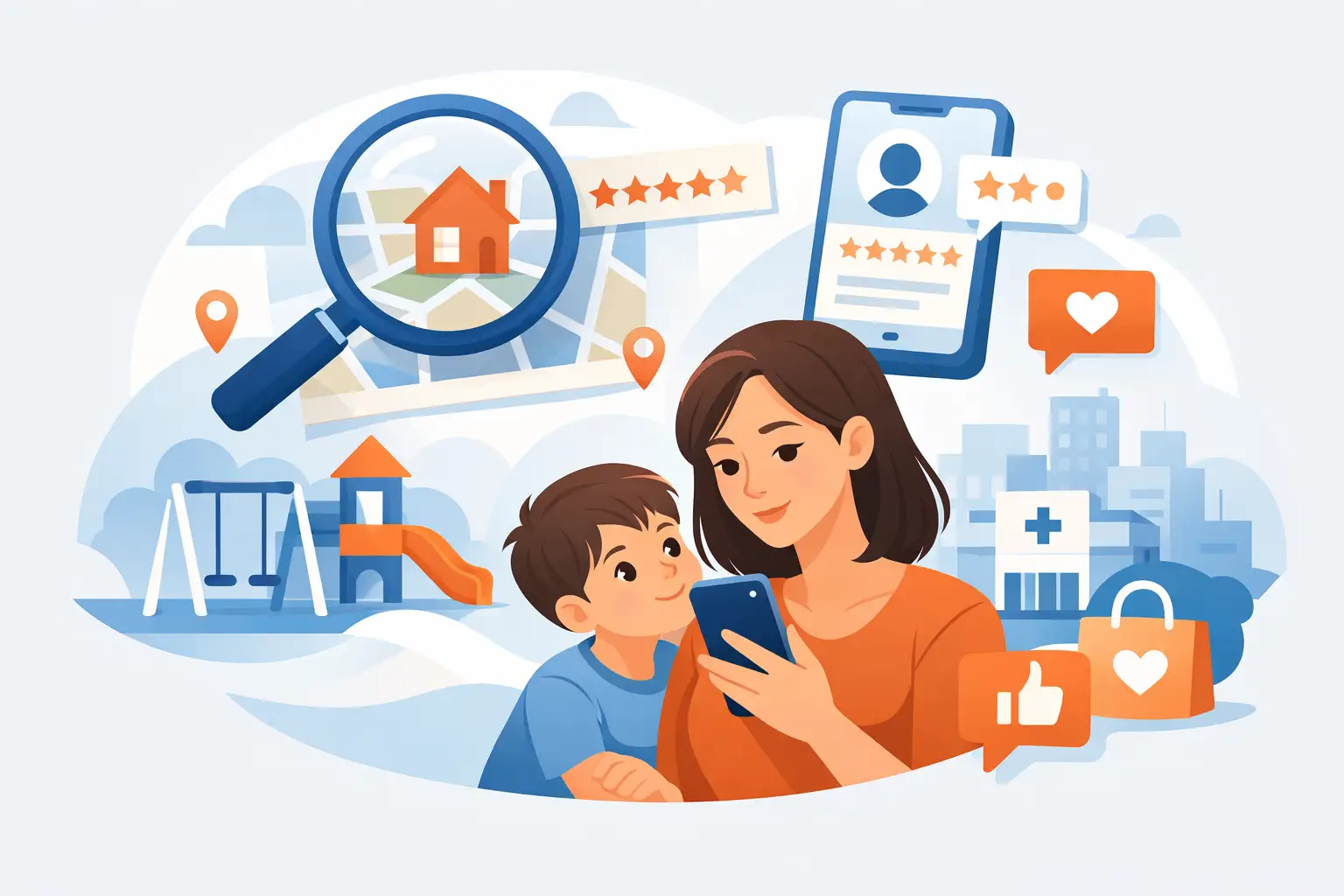
You have an hour between school pickup, dinner, and tomorrow’s work schedule. That is not much time to sort through profiles from people who live two states away or expect a last-minute date. A nearby search review matters because location can make dating feel more realistic for single parents – but only when it is used with care, clear expectations, and the right kind of dating community.
Map-based dating tools can shorten the distance between an interesting conversation and an actual coffee date. They can also raise reasonable questions about privacy, safety, and whether proximity is really more valuable than compatibility. Here is what nearby search can offer, where it falls short, and how to use it in a way that respects your life as a parent.
What Nearby Search Actually Does
Nearby search helps you find members within a chosen geographic area. Depending on your settings, you may see people in your neighborhood, city, or a wider radius that fits your travel comfort level. Instead of treating distance as an afterthought, the feature makes it part of your discovery process from the start.
For a single parent, that practical filter can be meaningful. A match who lives 15 minutes away may be easier to get to know than someone who lives 90 minutes away, especially when childcare, custody schedules, work hours, and gas costs are part of the picture. It does not mean the closest person is automatically the best match. It means you can spend more energy on people you could realistically meet.
On Single and Parent, nearby discovery works alongside profiles, matching, messaging, and video chat. Location helps narrow the field, while the rest of the experience gives you room to learn whether someone shares your values, pace, and relationship goals.
Nearby Search Review: The Real Benefits
The biggest benefit is not simply finding a date close to home. It is reducing friction. Many single parents have already experienced the excitement of a promising chat that fades once both people realize they are too far apart to make plans work. Nearby search can prevent some of that disappointment early.
It can also make dating feel less disruptive. If you only have certain evenings free or need to stay close to your child’s school and routines, a local match may be more likely to understand that a first date needs to be planned rather than spontaneous. A nearby connection does not eliminate scheduling challenges, but it gives both people a more workable starting point.
There is an emotional advantage, too. Building a relationship in the same general area can make it easier to share parts of real life over time. You may have familiar parks, restaurants, community events, or neighborhoods in common. Those shared reference points can make conversation warmer and less abstract.
Still, location should be a helpful filter, not a shortcut to trust. A person can live nearby and still be wrong for you. A thoughtful profile, respectful communication, and consistent behavior tell you far more than a pin on a map.
Why It Works Especially Well for Single Parents
General dating apps often assume people can meet whenever they feel like it. Parents know that is rarely how life works. Your availability may depend on a custody exchange, a babysitter, a sick child, a school event, or simply the need to rest after a full week.
When you connect with another parent nearby, there is a better chance that they recognize those realities without taking them personally. They may understand why you cannot answer every message immediately or why you need to schedule plans a few days ahead. That does not guarantee compatibility, but it can remove a common source of frustration.
Nearby search is particularly useful when you are looking for a relationship that can grow at a steady pace. At first, you might prefer a short coffee date near home. Later, if things feel promising, a closer distance can make it easier to maintain consistency without asking either person to rearrange their entire family life.
There is a trade-off, though. A very tight radius can shrink your options too much, especially in a smaller town or rural area. If your results feel limited, try expanding your range gradually. A 30- or 50-mile radius may still be manageable if you meet halfway or have flexible weekends. The right distance is the one that fits your actual life, not the one that looks best on a screen.
How to Use Local Dating Search Thoughtfully
Start with a distance setting that feels comfortable, then let your results guide you. If you live in a busy metro area, a smaller radius may offer plenty of choices. If you are outside a major city, a wider range can make sense. Think about roads, traffic, your parenting schedule, and how often you would realistically be open to meeting.
Your profile should support the same honesty. You do not need to share your exact neighborhood, your child’s school, or details about your custody arrangement. You can simply say that you are looking to meet someone in your area and that you value planning ahead. This sets a healthy expectation without giving away private information.
When someone catches your attention, read beyond their distance. Look for clues about how they approach parenting, communication, and relationships. Are they kind and specific in their profile? Do they seem comfortable with a slower, more intentional pace? Do their goals line up with yours? Nearby search can bring them into view, but conversation reveals whether they deserve more of your time.
Before meeting, use messages and video chat to establish a basic sense of comfort. A quick video conversation can help you confirm that the person matches their profile and that your conversation feels easy. It is also a sensible way to avoid spending a precious free evening on a date that was never likely to click.
Privacy and Safety Still Come First
A location feature should help you discover possibilities, not expose your routine. Keep your exact address private, and avoid sharing details that could identify where your children spend their time. If someone pressures you for that information early, treat it as a reason to slow down or move on.
For a first in-person meeting, choose a public place with other people around. Arrange your own transportation, let a trusted friend know your plans, and keep the date short enough that leaving feels simple if the energy is off. These are not signs that you are being guarded. They are sensible boundaries for anyone dating, especially when your family’s well-being is part of every decision.
It is also okay to wait. A nearby match may want to meet quickly because the distance is convenient, but convenience is not consent or readiness. If you need more messages, a video chat, or another week before making plans, the right person will respect that.
When Distance Should Matter Less
Local dating has clear advantages, but it should not become a rule that screens out a genuinely compatible person. Someone a little farther away who communicates well, respects your responsibilities, and has a schedule that aligns with yours may be a stronger prospect than someone five minutes away who expects too much too soon.
Consider the kind of relationship you want. If you are open to companionship and occasional dates, a broader radius may work well. If you hope to build a serious partnership with regular time together, travel logistics deserve more weight. Neither approach is wrong. What matters is being honest with yourself and with the people you meet.
A useful question is not, “How close do they live?” but, “Could we realistically make time for each other without either of us feeling stretched thin?” That answer includes distance, but it also includes effort, communication, parenting responsibilities, and mutual respect.
Make Proximity Work for Your Real Life
Nearby search is at its best when it gives you options without adding pressure. Use it to find people who are close enough for possibility, then take your time deciding whether the connection has substance. You are not looking for someone who simply appears on your map. You are looking for someone who understands why your time matters and wants to build something that fits the life you already have.
Set the radius that feels right, protect your privacy, and let meaningful conversation lead the way. The best local connection may begin with a simple message, but it grows through patience, reliability, and room for both your relationship and your family to be respected.